The Successor Generation
Profile
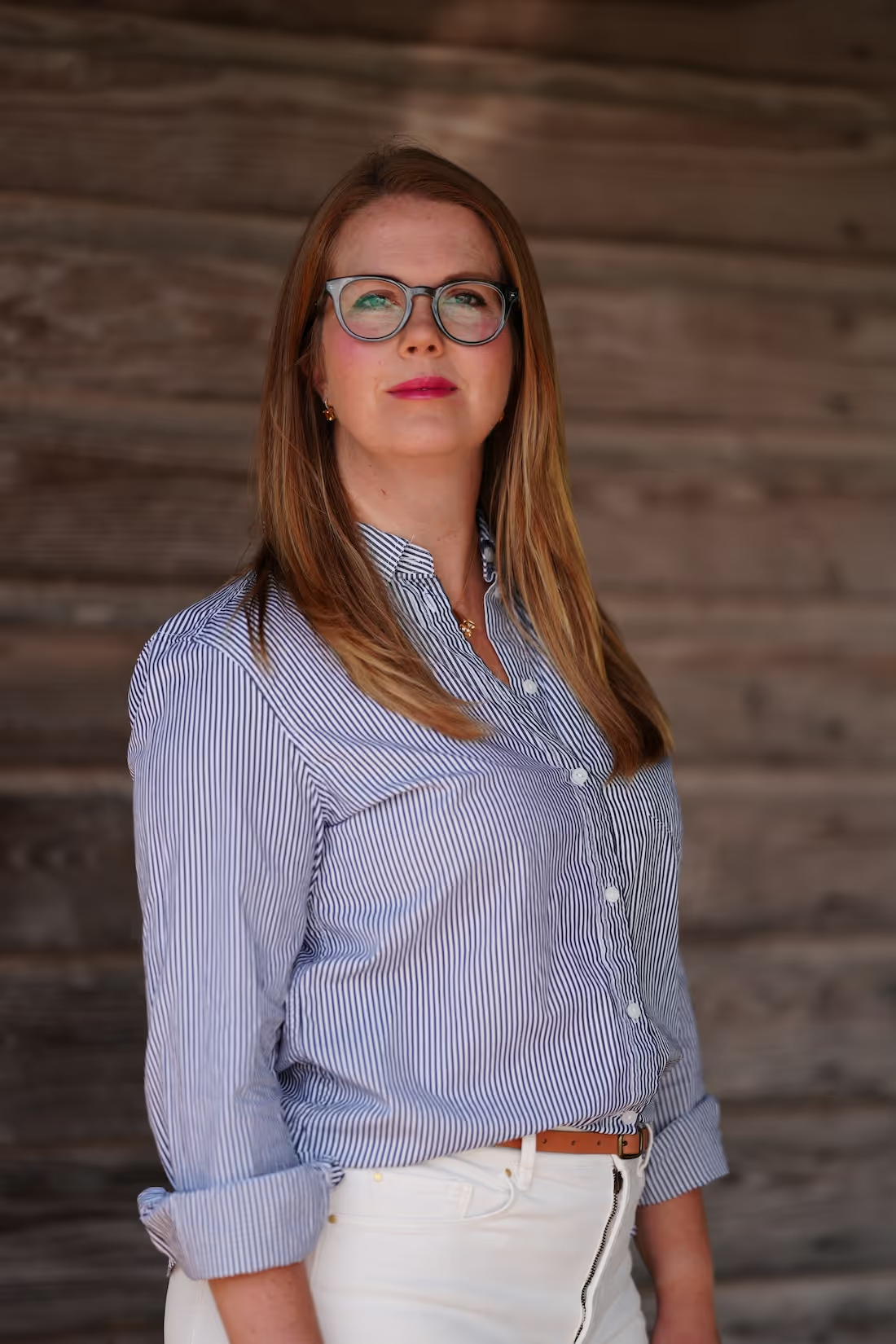
A second-generation daughter.
Married, with children of her own.
A working professional with her own career, household, and responsibilities.
Adult siblings. Aging parents.
Operating assets, investment accounts, real estate interests, and a family balance sheet approaching $75 million.
She had competence.
She had proximity.
She had her own full life.
She was becoming the person expected to take over the family enterprise and understand the whole balance sheet.
The Situation
The successor had been identified, but the structure around her had evolved with the role she was preparing to carry.
Her parents had built significant wealth over decades. The family enterprise was established. Advisors were in place. Assets were spread across accounts, entities, real estate, trusts, and legacy planning documents.
For years, decisions had lived primarily with the founding generation.
Now, more responsibility was beginning to move toward her.
The issue was readiness.
She needed a disciplined way to understand the family balance sheet, the advisor ecosystem, the estate structure, the enterprise, and the decisions that would eventually sit with her.
What We Saw
She was capable enough to lead. She was also inheriting complexity created by years of success.
We saw three pressure points:
Successor readiness
She was moving toward authority, but the path into that authority needed more structure, context, and sequencing.
Fragmented information
The family had strong advisors and meaningful assets, but the full picture was difficult to see in one frame.
Enterprise continuity
The family needed a stronger bridge between the generation that built the wealth and the daughter preparing to lead it.
What We Did
We began with a full review of the family’s investment structure, estate documents, entity ownership, liquidity needs, advisor relationships, enterprise interests, and long-term goals.
We organized the family balance sheet around control, flexibility, tax exposure, income needs, business risk, and future transfer.
We identified which decisions belonged to the parents, which required next-generation context, and which needed a more formal process before they became a source of friction.
We coordinated with legal and tax advisors so recommendations could be evaluated through one strategic lens.
We built an education and decision framework designed to help her understand the capital, the advisors, the enterprise, and the responsibility she was preparing to carry.
We helped translate inherited complexity into a structure she could lead.
Where She Is Now
Success looked like a daughter stepping into readiness with structure around her: organized capital, coordinated advisors, stronger decision rights, and a more disciplined path into future authority.
She knows what questions to ask.
She knows where authority sits.
She knows where risk is concentrated.
She knows how the enterprise connects to the family balance sheet.
She knows how to enter the conversation with competence instead of apology.
The family’s wealth now has a stronger bridge between the generation that built it and the generation preparing to lead it.
%20(12).png)